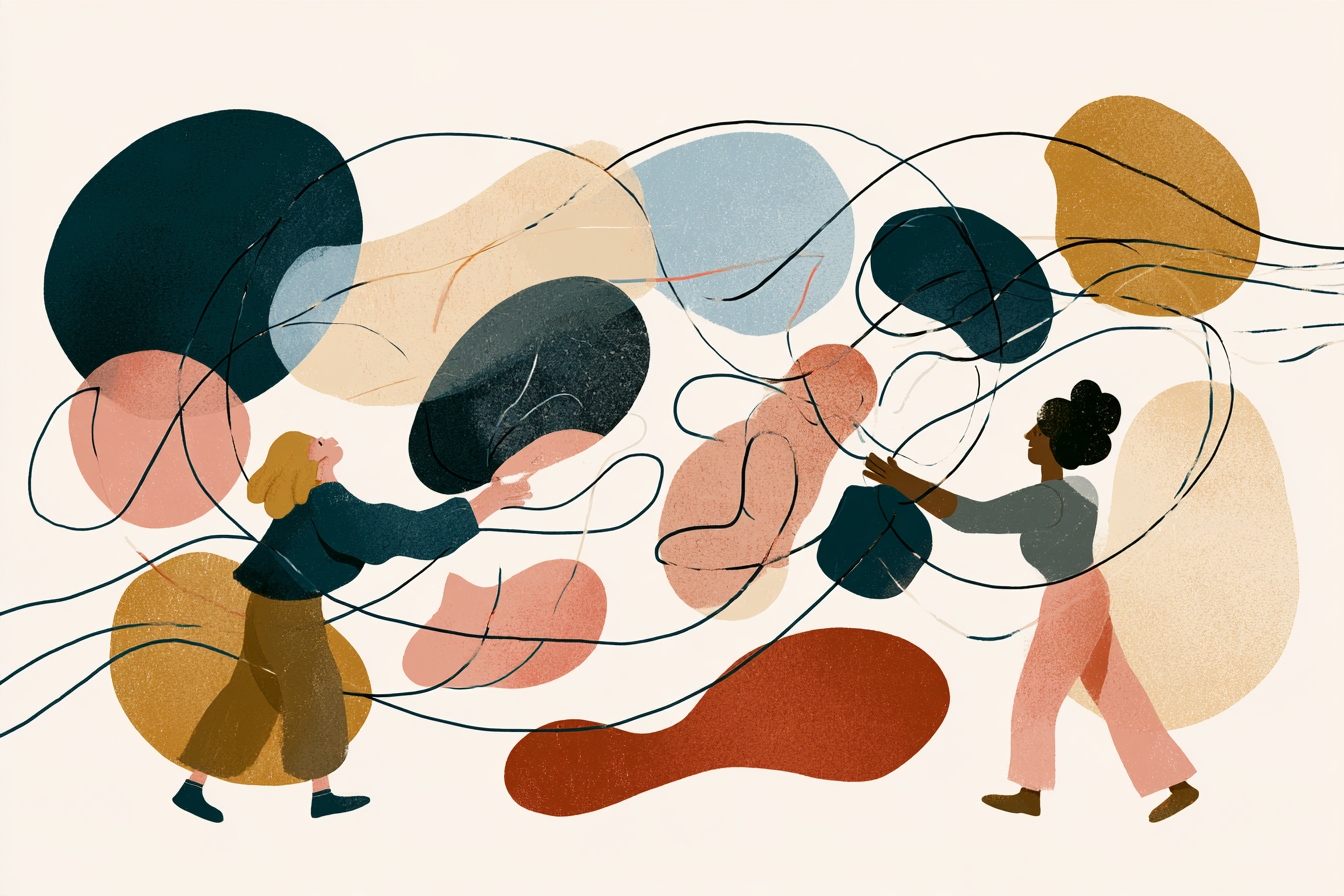
Knowledge is the first step.
We help mission-driven people and organisations turn knowledge into understanding, and understanding into action
through research, evaluation and strategic thinking.
Our Values and Beliefs
Every organisation that comes to us is trying to understand something.
Sometimes it's about the people they exist to support. Sometimes it's about the systems they're working within. Sometimes it's about whether they're making the difference they hoped to make.
The questions are rarely simple and neither are the answers. Every project is different, but the way we approach our work is shaped by a few simple beliefs:
We believe research is about more than generating evidence. It's about creating understanding. Understanding people more deeply. Understanding systems more clearly. Understanding enough to make better decisions about what comes next.
We believe the most important questions deserve thoughtful answers, not quick ones.
We believe evidence should help us understand the complexity of people's lives, rather than reduce it.
We believe that when people share their experiences, data or expertise with us, we're responsible for stewarding that knowledge carefully and making sure it has somewhere meaningful to go.
We believe good research should leave organisations better equipped to make decisions than they were before.
Whether we're exploring lived experience, evaluating a programme or helping shape an organisation's evidence strategy, our goal is always the same: to help you understand something important well enough to act on it.
Our work
Over the last decade, we've worked with charities, NGOs, funders, universities and public bodies on research spanning violence against women and girls, mental health, migration, access to services, community resilience and systems change.
Although the subject matter varies, much of our work returns to the same kinds of questions. Questions about harm, about systems, and about what helps create meaningful change. Read on for more details about the types of questions we help tackle.

Questions about harm
Much of our work seeks to understand harm in all its forms.
Sometimes that means exploring experiences of explicit harm such as violence, trauma or exploitation. Sometimes it means examining harms that are less immediately visible. Harm that sits in the gaps between policy and people's lives. Harm that is embedded within systems. Harm that is hidden in plain sight because the way we define a problem doesn't reflect how it's actually experienced.
Our work explores these kinds of questions, helping organisations understand experiences that are often overlooked, misunderstood or difficult to capture through conventional approaches. Whether harm occurs between individuals or is produced by the systems around them, we're interested in understanding how it is experienced, why it persists and what needs to change.

Questions about systems
People's lives are shaped by the systems they encounter. Sometimes those systems provide support. Sometimes they create barriers. Often they do both at once. Our work often involves engaging with questions such as:
Why do some people consistently struggle to access support?
Why do well-intentioned policies produce unintended consequences?
Why do some systems work well for some people but create barriers for others?
Our work explores how systems shape people's experiences, where they fall short and how they can better respond to the realities of the people they're intended to serve. We work with organisations to understand how systems shape people's experiences and where opportunities for change might lie, combining lived experience, organisational knowledge and wider evidence to build a fuller picture of what's happening.

Questions about change
One of the questions we're asked most often is:
Is this making a difference?
Understanding whether something works is often not as simple as measuring KPIs or counting how many people showed up.
Many of the organisations we work with are tackling complex social problems where change takes time, happens differently for different people, and isn't always easy to measure.
Our evaluations go beyond asking whether something works. They explore how change happens, what helps, why it happens for some people and not others, what gets in the way and how organisations can continue learning from the work they do.
Where do you need support?
-
![Four people observe, examine, and discuss a large, abstract, multi-colored painting of human faces intertwined, created in a painterly style. Designed by Abigail Bentley of AB Research Consulting.]()
We want to understand something
-
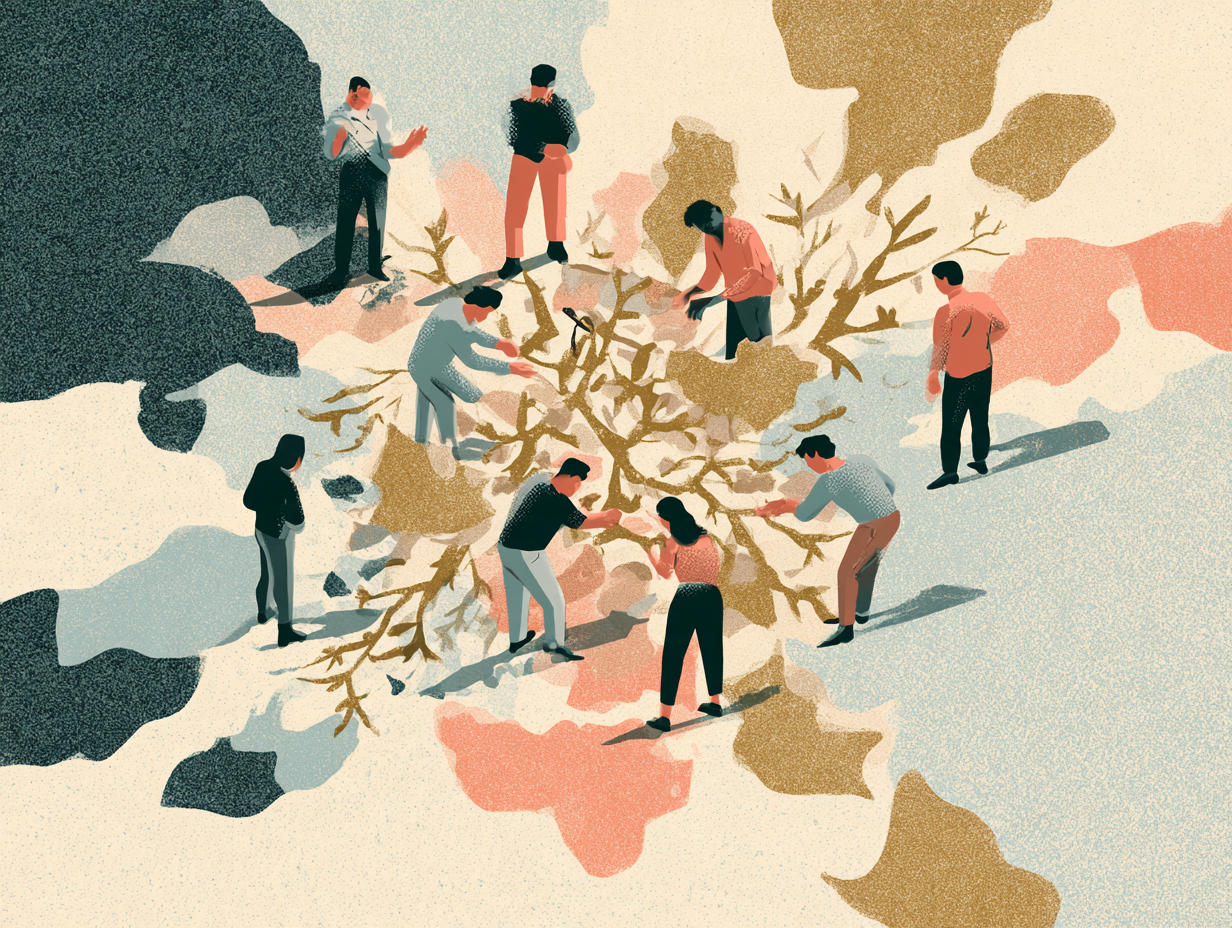
![Illustration of people working together to plant or care for a tree, viewed from above, with various patches of colored land and vegetation around them. Designed by Abigail Bentley of AB Research Consulting.]()
We want to know whether we're making a difference
-
![Illustration of multiple people browsing and examining scattered papers, sketches, and documents on a large, abstract, dark background. Designed by Abigail Bentley of AB Research Consulting.]()
We want to make sense of what we already know
-
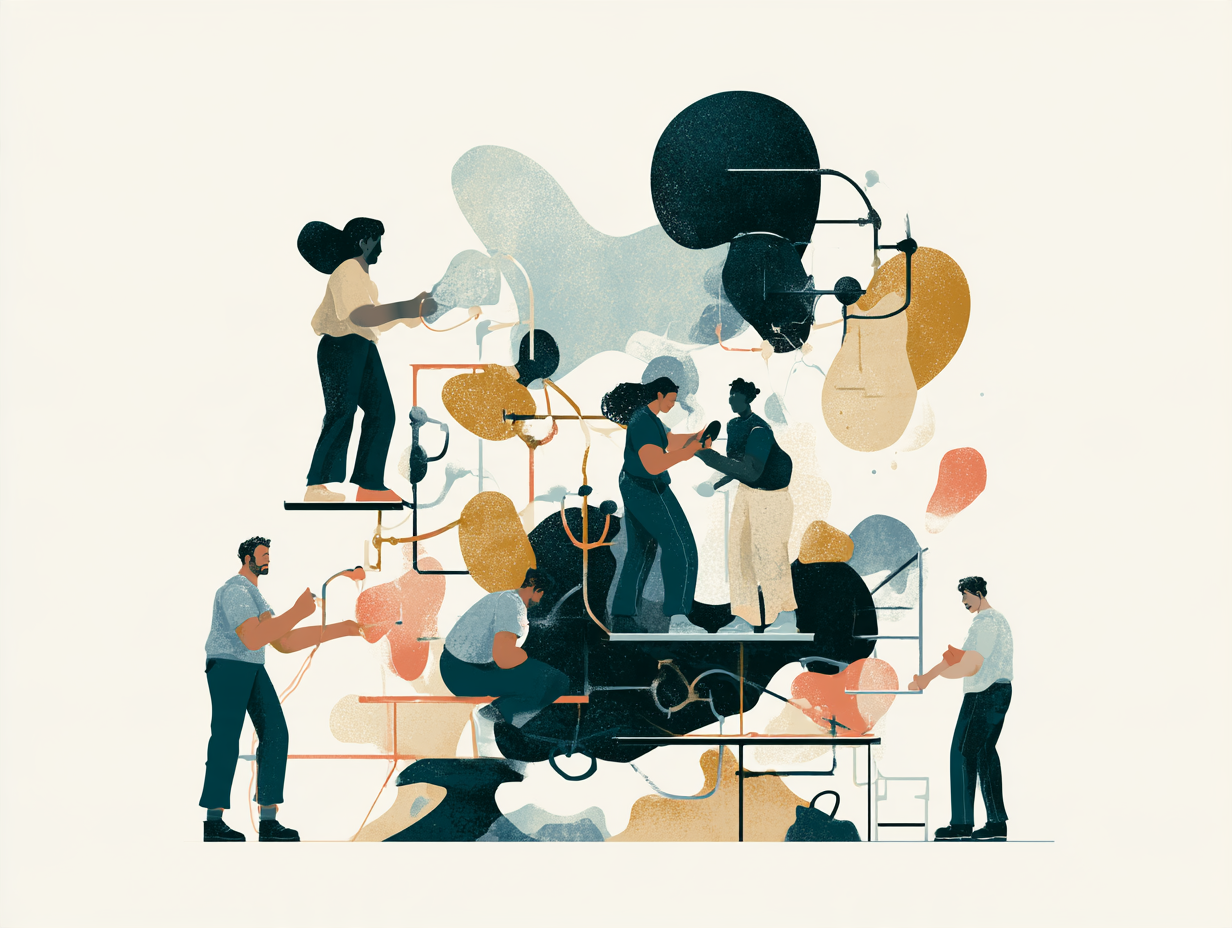
![Illustration of people working together assembling a large, abstract, machine-like structure with interconnected shapes and tubes. Designed by Abigail Bentley of AB Research Consulting.]()
We want to build our own capability
-
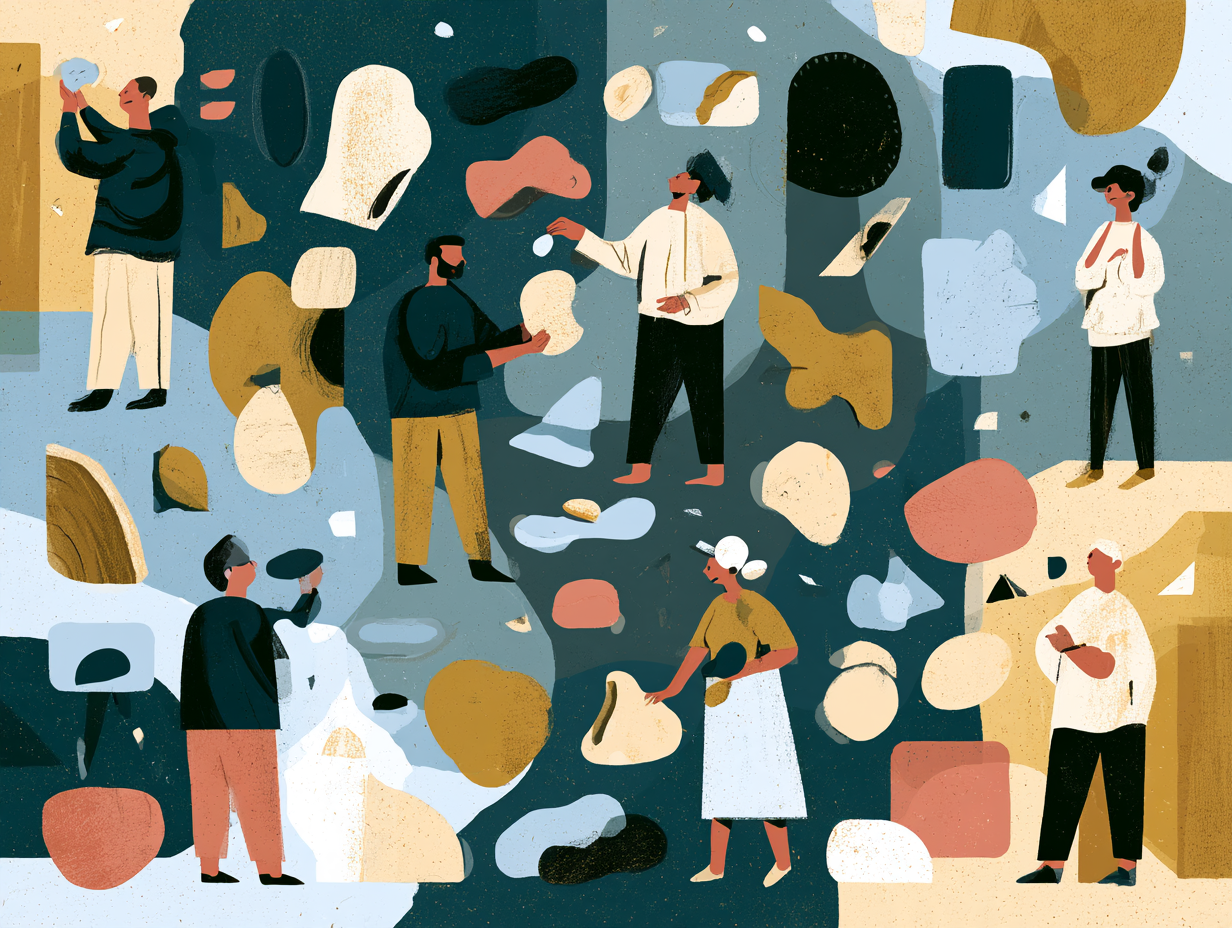
![]()
We're not sure what we need


Testimonials
“Abbie is the ideal researcher. She's both a safe pair of hands who will get the work done, someone you can trust to deliver even when you have a large-scale project that needs to be done over a short period of time but also someone who is extremely rigorous in her approach and will never compromise on adopting a trauma-informed approach when working with people in vulnerable situations. She always displayed extreme professionalism, kindness, and empathy during interviews and we received only positive feedback from both people she interviewed and colleagues she worked with. I would definitely hire her again for any project requiring qualitative research and needing someone experienced in dealing with people in vulnerable situation”
Eva Blum-Dumontet
Head of Movement Building and Policy - Chayn, 2026
“I had the pleasure of working with Abbie on a recent multi-strand mixed methods project on access to psychological therapies for young people at risk of violence. From the outset, Abbie was responsive, efficient, organised and always clear in her communication. She had flexibility with handling new requests and changing timelines with calm professionalism. The quality of the final report was outstanding. I would not hesitate to work with Abbie again.”
Hashim Ahmed
Research Manager, Youth Endowment Fund, 2025
“Abbie worked as a Research & Impact Consultant on one of ACH’s Career Information, Advice, and Guidance projects for refugees and migrants between 2023 and 2026. Given a clear brief, she collaborated with ACH staff to develop a comprehensive Monitoring, Evaluation, and Learning (MEL) Plan, along with a robust research strategy, methodologies, data collection resources, and staff training. She also conducted interviews with our stakeholders.
Abbie’s work exceeded all expectations; it was exceptionally thorough, insightful, and demonstrated a deep understanding of both our client base, organisational goals and research. Throughout the project, I maintained regular communication with her, and it was a genuine pleasure to bounce ideas off each other and draw on her expertise in research and impact evaluation.
The Monitoring, Evaluation, and Learning framework that Abbie developed is now being implemented across several ACH projects and remains essential in assessing our impact. Given the limited staff capacity within the third sector, I can confidently say that this achievement would not have been possible without Abbie. I cannot recommend her highly enough.”
Julia Dixon-Barrow
Entrepreneurship and Employer Engagement Manager, ACH, 2026

Get in touch
We’d be very happy to hear from you.